Hard Water: How to Spot It and What It Does
If you have ever noticed cloudy spots on your glassware, a crusty white ring around your faucet, or towels that feel a little rougher than they used to, you have probably met hard water firsthand. It is one of the most common household issues in our area, and while it is not dangerous to drink, it can be tough on your plumbing, your appliances, and even your laundry over the long run.
Understanding what hard water is and how it shows up in your home can help you decide whether it is worth addressing, and what your options look like if you want to do something about it. Here is what homeowners in Bloomfield should know.
What Makes Water 'Hard' in the First Place
Water is considered hard when it carries a higher amount of dissolved minerals, mainly calcium and magnesium, as it travels through the ground before reaching your home. These minerals are naturally occurring and are not harmful to drink, but they behave differently than soft water once they meet soap, heat, or metal surfaces.
As hard water moves through your pipes, water heater, and fixtures, those minerals slowly separate out and leave deposits behind. Over time, this build-up is what leads to the visible signs most people associate with hard water, and it is also what can affect how your plumbing system performs.
Signs You're Dealing With Hard Water
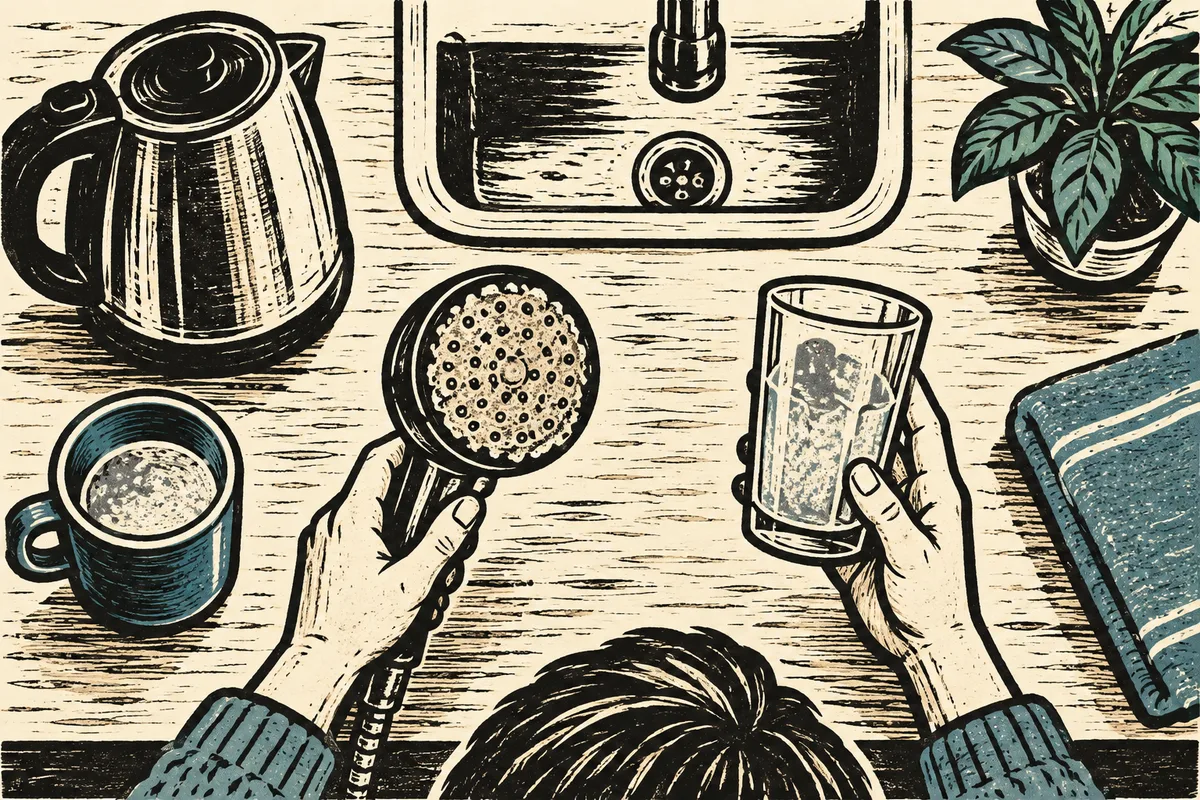
The easiest place to spot hard water is usually in the kitchen and bathroom. Look for white or chalky residue around faucet handles, on shower doors, or inside the tea kettle. Dishes coming out of the dishwasher with spots or a slightly filmy look are another common clue, even when the dishwasher itself is working fine.
Laundry can tell a story too. Hard water makes it harder for detergent to fully dissolve and rinse away, which can leave clothes and towels feeling stiff or looking a little dull after washing. Some people also notice their skin or hair feels different after showering, since soap does not rinse away as easily in hard water.
If you are seeing several of these signs at once, there is a good chance hard water is at play. A visible ring of scale on a faucet or showerhead is often the clearest giveaway, since that build-up does not show up with soft water.
What Hard Water Can Do Over Time
The same mineral deposits that show up on your fixtures can also build up inside your plumbing system where you cannot see them. Inside pipes, this build-up can gradually narrow the space water flows through, which may lead to reduced water pressure at your faucets and showers.
Water heaters are especially affected, since heat speeds up how quickly minerals settle out of the water. Deposits can collect at the bottom of a tank or coat internal components, which may make the unit work harder to heat the same amount of water. Faucets, valves, and appliances like dishwashers and washing machines can also collect deposits internally, which can shorten how well they perform over time.
None of this happens overnight, and plenty of homes with hard water go a long while without major issues. But if build-up is left unchecked for years, it tends to show up eventually as reduced water flow, a water heater that seems to run less efficiently, or fixtures that need more frequent attention.
Options for Managing Hard Water
There are a few common approaches homeowners use to deal with hard water, and the right choice usually depends on how hard the water is and what your household needs. Whole-home water softening systems treat water as it enters the house, which addresses the mineral content before it ever reaches your pipes or fixtures. Point-of-use filters are another option, and they focus on specific taps rather than the whole system.
Regular maintenance also plays a role no matter which approach you choose. Flushing a water heater periodically, cleaning faucet aerators and showerheads, and keeping an eye on water pressure can all help you catch build-up before it becomes a bigger inconvenience.
Every home's water is a little different, and what makes sense for one household might not be the right fit for another. If you are noticing signs of hard water or just want to refresh your knowledge on how it might be affecting your specific plumbing setup, it is worth talking it through with someone who can look at your system directly.
When It Might Be Time to Call a Plumber
If you are dealing with noticeably reduced water pressure, a water heater that seems to be working overtime, or fixtures that keep collecting stubborn deposits no matter how often you clean them, those are good signs it is time to have a professional take a look. A closer inspection can help determine whether hard water build-up is contributing to the issue and what your options are from there.
Stamp Plumbing & Heating works with homeowners throughout Bloomfield on everything from water heaters and water lines to everyday fixture and drain concerns, so if hard water has you wondering about the condition of your home's plumbing, give us a call. We are happy to answer questions and help you figure out the best path forward for your particular situation.
Questions about your own situation? The team at Stamp Plumbing & Heating is happy to help — call us at (862) 333-9396 or request an appointment.
This article is for general information only.