How Long Water Heaters Last — and Signs Yours Is Aging
Your water heater works quietly in the background of your home, warming up water for showers, dishes, and laundry without asking for much attention. Because it's tucked away in a basement or closet, it's easy to forget it's even there until something goes wrong.
The trouble is, water heaters don't usually fail all at once with a loud warning bell. They tend to wear down slowly, giving off small clues along the way. Knowing what those clues look and sound like can help you plan ahead instead of dealing with a sudden mess.
In this post, we'll walk through how long water heaters generally last, what signs point to an aging unit, and why getting ahead of a replacement is almost always the smarter move.
How Long Water Heaters Typically Last
Most traditional tank water heaters are built to last somewhere between eight and twelve years, though this can shift depending on the water quality in your area, how the unit was installed, and how much use it gets. Homes with hard water often see more mineral build-up inside the tank, which can shorten its working life.
Tankless water heaters tend to last longer, often stretching into the fifteen to twenty year range, since they don't store standing water the same way. Still, they aren't immune to aging. Parts wear out, sediment can collect in the system, and connections can loosen over time.
If you're not sure how old your water heater is, check the manufacturer's label on the side of the tank. It usually includes a serial number that can help pinpoint the installation date. Knowing this number gives you a much clearer picture of where your unit stands in its lifespan.
The Noises That Signal Trouble
A water heater that's aging often starts to sound different before it looks different. Rumbling, popping, or knocking noises coming from the tank are usually caused by sediment that has settled at the bottom and hardened over time. As the burner heats the water, it has to work through that layer, which creates the noise.
Some homeowners describe it as a sound similar to popcorn popping or gravel shifting inside the tank. While it might not seem urgent, this build-up can reduce how efficiently the unit heats water and puts extra strain on the tank itself.
Hissing or dripping sounds are worth paying attention to as well, especially if they seem to come from valves or fittings. These can point to pressure issues or small leaks that haven't become obvious yet but are worth having checked out.
Rust, Leaks, and Other Visual Clues
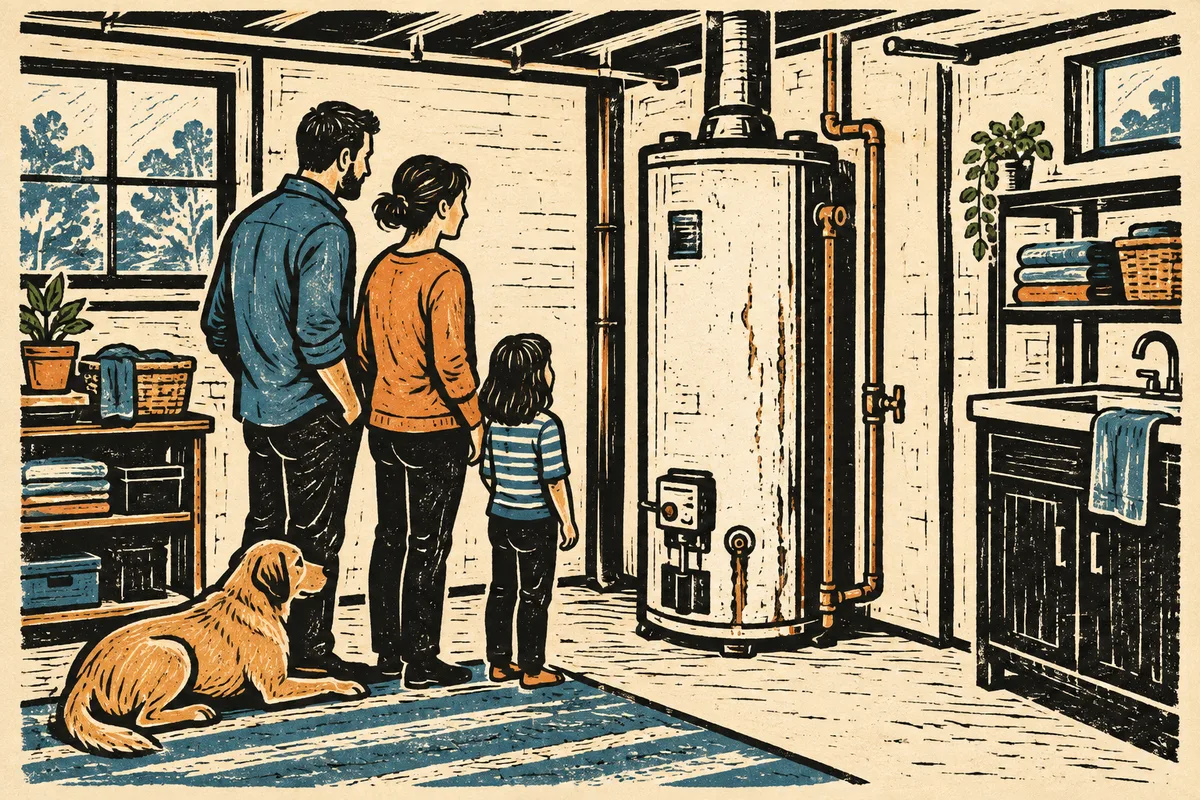
Rust is one of the clearest signs that a water heater is on its way out. If you notice rust-colored water coming from your hot water taps, or see rust forming around the tank's fittings or the pressure relief valve, it usually means corrosion has started inside the tank itself.
Puddles or damp spots near the base of the unit are another sign worth taking seriously. Even a small amount of moisture can mean a slow leak is starting, and tanks rarely repair themselves once they begin to corrode from the inside.
It's also worth glancing at your water heater every so often just to get familiar with what normal looks like. That way, when something changes, whether it's a new stain, a bulge in the metal, or water pooling underneath, you'll notice it sooner rather than later.
Why Proactive Replacement Beats a Flood
It can be tempting to wait until a water heater completely stops working before replacing it, especially if it still seems to be doing its job. But tanks that fail often do so suddenly, releasing dozens of gallons of water onto floors, into walls, or down into a finished basement.
Replacing a water heater on your own schedule, before it fails, gives you time to think through your options and choose a unit that fits your household's needs. It also means you avoid the stress of dealing with standing water, damaged flooring, or a scramble to find hot water on short notice.
If your water heater is getting close to the end of its typical lifespan, or if you've noticed any of the noises or visual signs mentioned above, it's a good idea to have someone take a look before those small signs turn into a bigger problem.
At Stamp Plumbing & Heating, we work with homeowners throughout Bloomfield, NJ on water heater repairs and replacements, along with a wide range of other plumbing and heating needs. If you have questions about your own water heater or want an honest opinion on whether it's time for a change, give us a call. We're happy to talk through what you're seeing and help you figure out the next step.
Questions about your own situation? The team at Stamp Plumbing & Heating is happy to help — call us at (862) 333-9396 or request an appointment.
This article is for general information only.