The Running Toilet: Small Sound, Real Waste
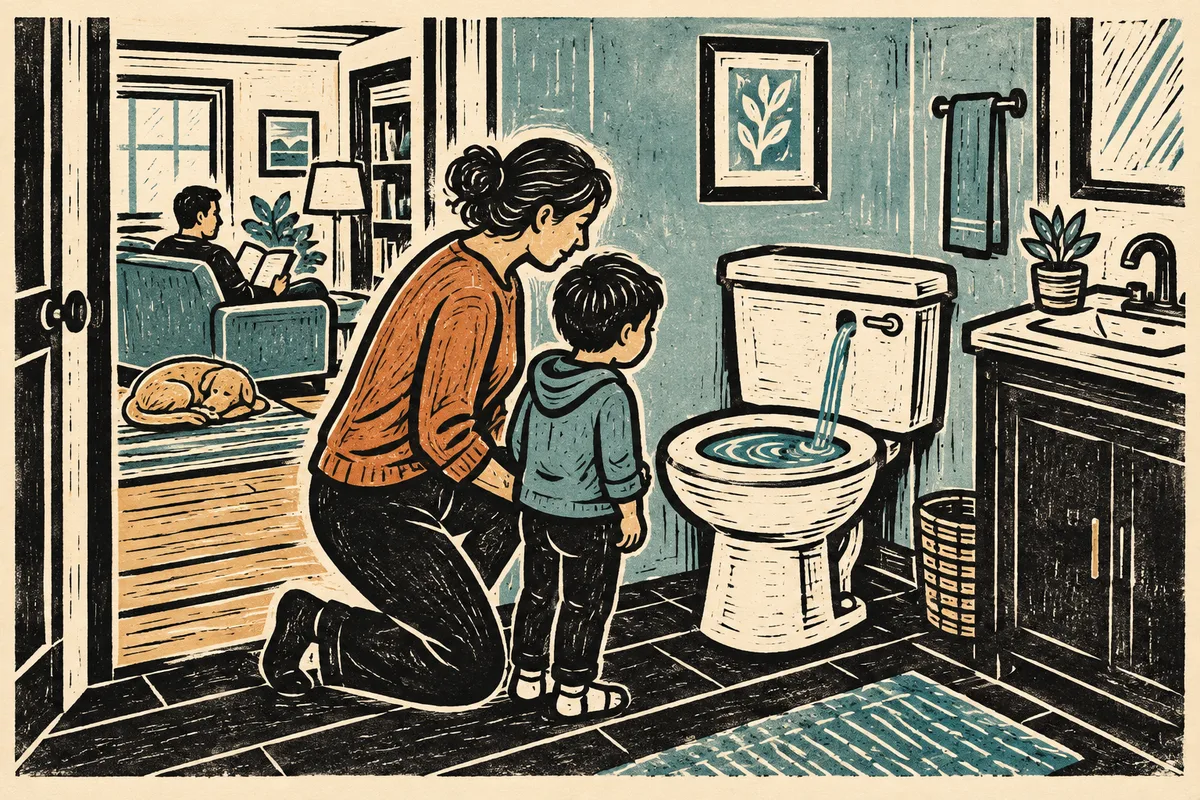
A running toilet is one of those household sounds that's easy to tune out. It's not loud, it's not dramatic, and the toilet still works fine when you use it. But that steady trickle or hiss coming from the tank is often a sign that water is running when it shouldn't be, and that adds up over time.
Most people notice a running toilet weeks after it starts, usually when they hear it kick on in the middle of the night or notice their water bill creeping up. The good news is that the cause is usually something small inside the tank. Understanding what's happening back there can help you decide whether it's a quick fix or a job worth calling in help for.
What's Happening Inside the Tank
Lift the lid off your toilet tank and you'll see a few key parts working together. There's a fill valve that lets water into the tank after a flush, a float that tells the fill valve when to stop, a flapper that seals the bottom of the tank so water doesn't drain into the bowl, and an overflow tube that keeps the tank from spilling over if something goes wrong.
When a toilet runs continuously, it usually means one of these parts isn't sealing or shutting off the way it should. The flapper might not be sitting flat, the float might be set too high, or the fill valve itself might have worn out. Water finds the smallest opening, so even a slightly warped flapper can let a steady trickle pass through, keeping the fill valve working overtime.
Simple Fixes You Can Try
Before assuming the worst, it's worth taking a look inside the tank yourself. Start by checking the flapper. Over time, rubber flappers can warp, crack, or collect mineral build-up along the edges, which keeps them from sealing tightly. If it looks worn or doesn't sit flush against the valve seat, replacing it is usually a straightforward fix.
Next, check the float. If the water level sits above the overflow tube, water will constantly drain into that tube and trigger the fill valve again and again. Adjusting the float down a bit, or bending the float arm if it's the older style, can often solve the problem right away.
It's also worth checking the chain that connects the flapper to the flush handle. If it's too tight, the flapper may not seal all the way. If it's too loose, it can get caught under the flapper and hold it open. A small adjustment here can make a bigger difference than you'd expect.
When It's More Than a Worn Part
Sometimes the fix isn't as simple as swapping a flapper. If the fill valve itself is old or full of mineral build-up, water may keep leaking past it no matter how well the flapper seals. In older toilets, the valve seat where the flapper rests can become rough or pitted, which prevents a good seal even with a brand new flapper.
In rarer cases, a running toilet points to a crack in the tank or a problem with the overflow tube itself. These issues aren't always visible right away, and they tend to get worse instead of better. If you've replaced the flapper and adjusted the float but the toilet still runs, it's a good sign that something deeper in the mechanism needs a closer look.
Why Ignoring It Costs You
A running toilet doesn't just make noise. It sends water straight down the drain, day and night, whether anyone is home or not. Over weeks and months, that steady waste shows up on your water bill in ways that are easy to overlook until you compare it to previous months.
There's also the wear factor. A fill valve that's constantly cycling on and off works harder than it was designed to, which can shorten its life. Left alone long enough, a running toilet can also lead to water pooling around the base or seeping where it shouldn't, especially in older bathrooms where seals and connections have had years to loosen.
When to Call a Plumber
If you've tried adjusting the flapper and float and the sound keeps coming back, or if you notice water around the base of the toilet, it's a good time to have someone take a closer look. Stamp Plumbing & Heating handles toilet repair for homes throughout Bloomfield, NJ, and we're glad to take a look at what's really going on inside your tank.
Every toilet and every bathroom setup is a little different, so if you're not sure whether what you're hearing is normal wear or something that needs attention, give us a call. We're happy to walk through what you're noticing and help you figure out the next step.
Questions about your own situation? The team at Stamp Plumbing & Heating is happy to help — call us at (862) 333-9396 or request an appointment.
This article is for general information only.