What Your Garbage Disposal Can and Can't Handle
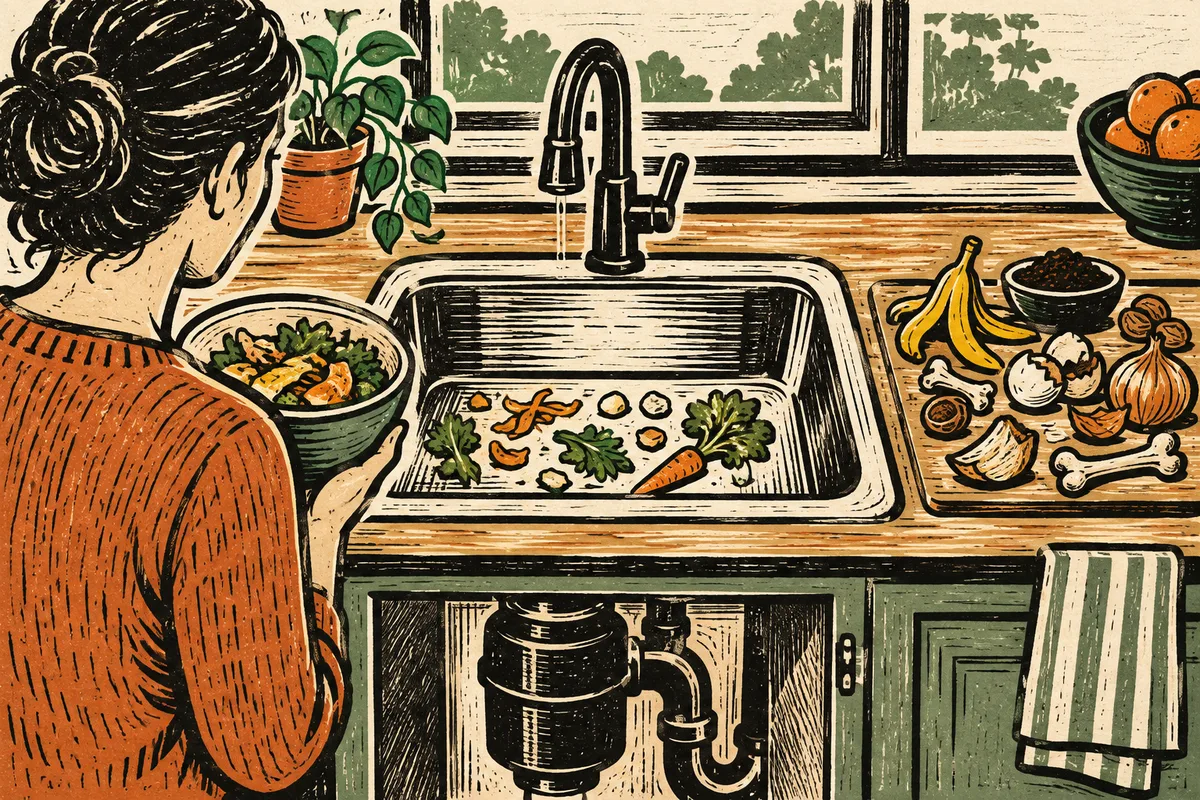
Your garbage disposal works hard every day, chopping up food scraps so they can wash safely down the drain. But it isn't designed to handle everything you might toss in there. Knowing what belongs in your disposal and what belongs in the trash can save you a lot of headaches down the road.
In this post, we'll walk through the foods that tend to cause the most trouble, some simple habits that help your disposal last longer, and the sounds that mean it's time to turn it off and give us a call.
Foods That Jam the Blades
Some foods seem harmless but end up wrapping around the blades or getting stuck in tight spaces. Stringy or fibrous vegetables like celery, corn husks, and artichoke leaves are common troublemakers. Their long fibers can tangle around the moving parts and cause the motor to strain or stop working altogether.
Potato peels are another sneaky one. They're starchy and can turn into a paste-like build-up that clogs the drain instead of breaking down cleanly. Eggshells fall into a similar category. While some people believe the shells sharpen the blades, the thin membrane inside them can stick to the sides of the disposal and cause build-up over time.
Pasta, rice, and bread are worth mentioning too. These foods expand when they get wet, and that includes after they've already gone down the drain. Small amounts probably won't cause an issue, but larger quantities can swell up inside your pipes and lead to a slow drain or a full clog.
Foods That Dull or Damage the Disposal
Grease, oil, and fat are some of the worst things you can pour down a disposal, even though they seem liquid enough to wash away. As they cool inside your pipes, they harden and create sticky build-up that traps other debris and narrows the pipe over time.
Bones, fruit pits, and shells from shellfish are far too hard for most disposals to handle. These items can dull the blades or, in some cases, damage the motor if they get stuck. It's best to scrape these into the trash rather than risk it.
Coffee grounds are another one people are often surprised about. In small amounts they seem fine, but they tend to settle into a thick sludge inside the pipes rather than washing through cleanly.
Simple Habits That Help Your Disposal Last
Running cold water while the disposal is on, and for a short time after, helps move food waste through the pipes and keeps grease from softening and sticking to the sides. Cold water also helps keep the motor cool while it's working.
Try to feed food scraps in gradually rather than dumping in a large amount all at once. Giving the blades time to break things down in smaller batches puts less strain on the motor and reduces the chances of a jam.
It also helps to run your disposal regularly, even when you don't have much to grind up. A disposal that sits unused for long stretches is more likely to develop rust or a buildup of odor-causing residue inside the chamber. A quick refresh with some cold water and a few ice cubes every so often can help keep things clear.
Sounds That Mean It's Time to Stop and Call
A healthy disposal usually makes a steady humming sound while it's working. If you start hearing grinding, rattling, or a high-pitched squeal, something inside may have shifted out of place or gotten stuck. Continuing to run the disposal after hearing these sounds can put more stress on the motor.
A loud clanking noise often means something hard, like a utensil or a piece of bone, has gotten into the chamber. Turn the disposal off right away and avoid running it again until the object has been removed safely.
If your disposal hums but doesn't spin at all, or if it trips your circuit repeatedly, that's usually a sign of a bigger issue with the motor or the switch. This isn't something to keep testing on your own, since repeated attempts can sometimes make the problem worse.
If you're hearing strange noises, noticing slow drainage, or you're just not sure whether what you're dealing with is normal wear or something more serious, give Stamp Plumbing & Heating a call. We're happy to talk through what you're experiencing and help you figure out the right next step for your kitchen in Bloomfield, NJ.
Questions about your own situation? The team at Stamp Plumbing & Heating is happy to help — call us at (862) 333-9396 or request an appointment.
This article is for general information only.